








































Domaine Marshall
Jean Marshall
The story of Domaine Marshall begins in the early 1960s, when Yorkshire-born Tim Marshall stepped off a train in Nuits-Saint-Georges and decided to stay. At a time when Burgundy was still inward-looking, he quietly put down roots, marrying locally and assembling a modest two-hectare domaine across some of the Côte de Nuits’ most soulful sites. Much of the fruit was sold most notably to Méo-Camuzet and the estate remained discreet, almost invisible, for decades.
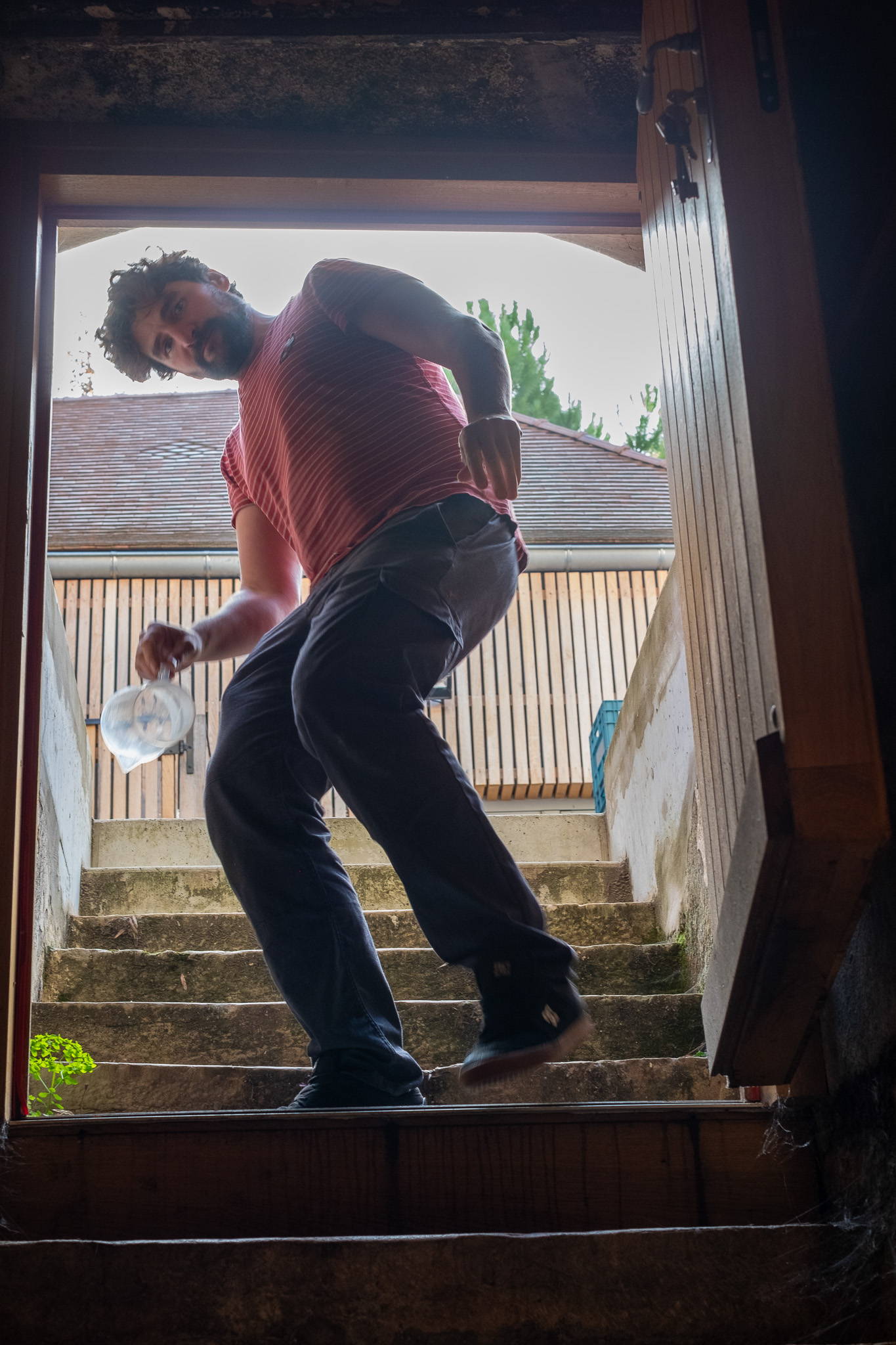
After Tim’s passing in 2015, the vineyards continued to be leased, and his son Jean pursued a very different life, training as a psychologist in Lyon. Yet Burgundy eventually called him back. In 2022, after nearly twenty years away from the family land and following experience at Domaine Arnoux-Lachaux, Jean returned to reclaim the domaine not to replicate the past, but to rethink it entirely.

The story of Domaine Marshall begins in the early 1960s, when Yorkshire-born Tim Marshall stepped off a train in Nuits-Saint-Georges and decided to stay. At a time when Burgundy was still inward-looking, he quietly put down roots, marrying locally and assembling a modest two-hectare domaine across some of the Côte de Nuits’ most soulful sites. Much of the fruit was sold most notably to Méo-Camuzet and the estate remained discreet, almost invisible, for decades.
After Tim’s passing in 2015, the vineyards continued to be leased, and his son Jean pursued a very different life, training as a psychologist in Lyon. Yet Burgundy eventually called him back. In 2022, after nearly twenty years away from the family land and following experience at Domaine Arnoux-Lachaux, Jean returned to reclaim the domaine not to replicate the past, but to rethink it entirely.

Inspired by figures such as Lalou Bize-Leroy and Charles Lachaux, he has embraced a radical, regenerative vision of viticulture. His two hectares are farmed entirely by hand: no tractors, no diesel, no mechanical shortcuts. The vineyard is treated as a living ecosystem rather than a production unit, with permanent cover crops, no plowing, and an emphasis on soil life above all else.
On parcels such as Perrières 1er Cru, he has planted fruit trees peach and apricot among them to create shade, regulate the microclimate, and encourage underground microbial networks. Jean uses unusually tall stakes, allowing canopies to rise higher than standard practice. This increases photosynthesis while protecting fruit from excessive heat closer to the ground and elegant response to climate change. The trade-off is obvious: higher water demand, lower yields, more labor. Jean accepts all of it. Each vine is observed and treated individually, according to its own needs.
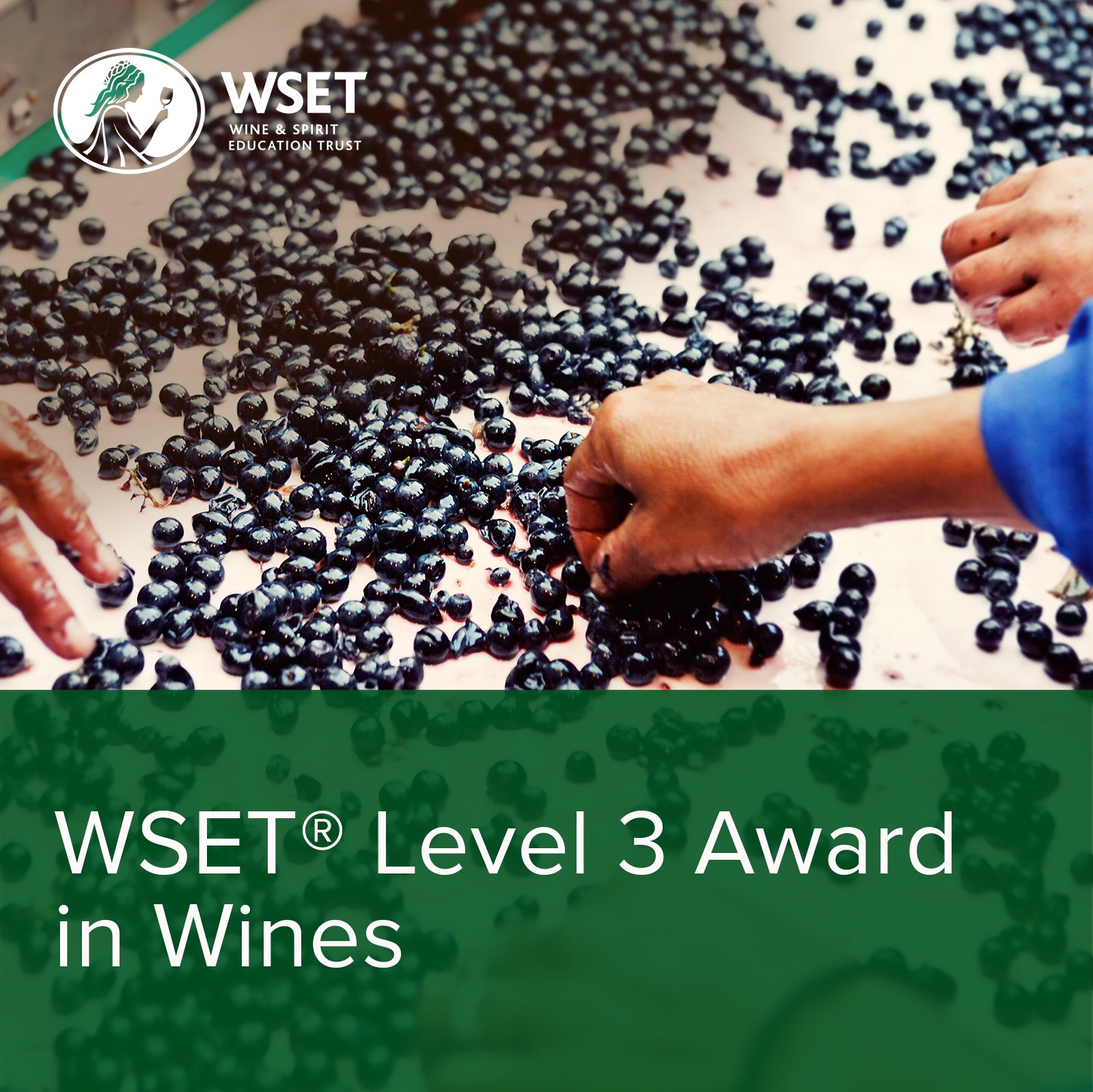
In the cellar, the same philosophy applies. Vinifications are gentle and precise. Fermentations begin naturally with pied de cuve, and all grapes are vinified as whole clusters. Sorting is unforgiving: on vibrating tables, only pristine fruit is accepted, because in Jean’s cellar there is nowhere to hide imperfections.
The most striking choice, however, is the complete absence of oak. Élevage takes place exclusively in low-permeability ceramic vessels, whose reduced porosity allows far less oxygen exchange than traditional barrels. The pace of evolution is glacial, requiring up to 24 months of élevage, but the reward is clarity. No toast, no spice, no wood tannin, just fruit, structure, and site. The wines feel linear, lifted, and quietly intense, like unamplified sound: initially disarming, then deeply compelling.
Jean produced his first full vintage in 2023, vinified in a compact cellar in Nuits-Saint-Georges. The wines are still youthful, dense, and primary, but what already stands out is their purity and exactitude. Methods may evolve, but the intent is clear. Domaine Marshall is not about revival or nostalgia it is about precision, integrity, and a quietly radical vision for Burgundy.


REGION OF PRODUCTION
Burgundy
APPELLATION
Bourgogne, Nuits-Saint-Georges, Chambolle-Musigny
FOUNDED
2022
VINEYARD
-
CLIMATE
Continental climate
SOIL COMPOSITION
Clay and Limestone
VARIETIES GROWN
Chardonnay, Pinot Noir
AGRICULTURE
Organic