











Login

CHAMPAGNE EMILIEN FENEUIL

Emilien Feneuil
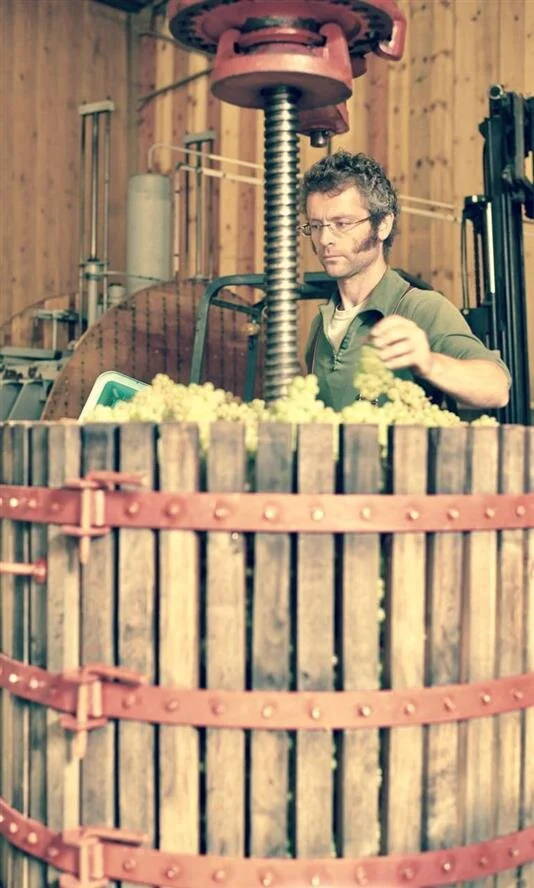
Emilien returned to his family's domaine in Sermiers in 2006, stepping back into a landscape shaped by conventional viticulture, herbicides, chemical fertilisers, the inherited logic of productivity over vitality. His father had grown grapes alongside vegetables, selling the fruit to large houses as the family had always done. For a time, Emilien followed suit. He had trained at the wine school in Avize, learned the official methods, and carried that education home with him.

Then, in 2008, something shifted. He attended a meeting on organic farming and found himself in a room with older growers, men who had farmed conventionally their entire lives openly questioning everything they had been taught. Their willingness to change, late in life, without agenda or ego, struck him deeply. The conversion began.

What followed was not a rapid pivot but a years-long immersion. Emilien studied biodynamics through Pierre Masson's teachings, explored geobiology and agroforestry, and began applying these disciplines to his seventeen fragmented parcels across Sermiers, Chamery, and Écueil. The transformation was undeniable and unhurried: the earth grew darker, richer, more fragrant. Plant diversity returned. The vines showed greater resilience. The flavour of the fruit became more layered, more itself. Between 2009 and 2014, he continued selling his harvest to houses including Leclerc-Briant and Aurélien Laherte, not because he lacked ambition, but because he wanted to earn the right to make wine. He needed to be certain the vineyard was ready before the cellar was ever involved.

In 2015, after nearly a decade of quiet, radical work in the soil, Emilien Feneuil produced his first vintage.
Emilien returned to his family's domaine in Sermiers in 2006, stepping back into a landscape shaped by conventional viticulture, herbicides, chemical fertilisers, the inherited logic of productivity over vitality. His father had grown grapes alongside vegetables, selling the fruit to large houses as the family had always done. For a time, Emilien followed suit. He had trained at the wine school in Avize, learned the official methods, and carried that education home with him.

Then, in 2008, something shifted. He attended a meeting on organic farming and found himself in a room with older growers, men who had farmed conventionally their entire lives openly questioning everything they had been taught. Their willingness to change, late in life, without agenda or ego, struck him deeply. The conversion began.

What followed was not a rapid pivot but a years-long immersion. Emilien studied biodynamics through Pierre Masson's teachings, explored geobiology and agroforestry, and began applying these disciplines to his seventeen fragmented parcels across Sermiers, Chamery, and Écueil. The transformation was undeniable and unhurried: the earth grew darker, richer, more fragrant. Plant diversity returned. The vines showed greater resilience. The flavour of the fruit became more layered, more itself. Between 2009 and 2014, he continued selling his harvest to houses including Leclerc-Briant and Aurélien Laherte, not because he lacked ambition, but because he wanted to earn the right to make wine. He needed to be certain the vineyard was ready before the cellar was ever involved.

In 2015, after nearly a decade of quiet, radical work in the soil, Emilien Feneuil produced his first vintage.
Emilien's approach to viticulture defies easy categorisation, which is precisely the point. He holds organic certification, but he has long moved beyond its framework. After years of biodynamic practice, he found himself drifting from prescribed methods that no longer felt intuitive, recalibrating toward something more personal, fermented herbal teas, honey, clay, essential oils and energies, tools chosen not by doctrine but by conversation with the land itself.

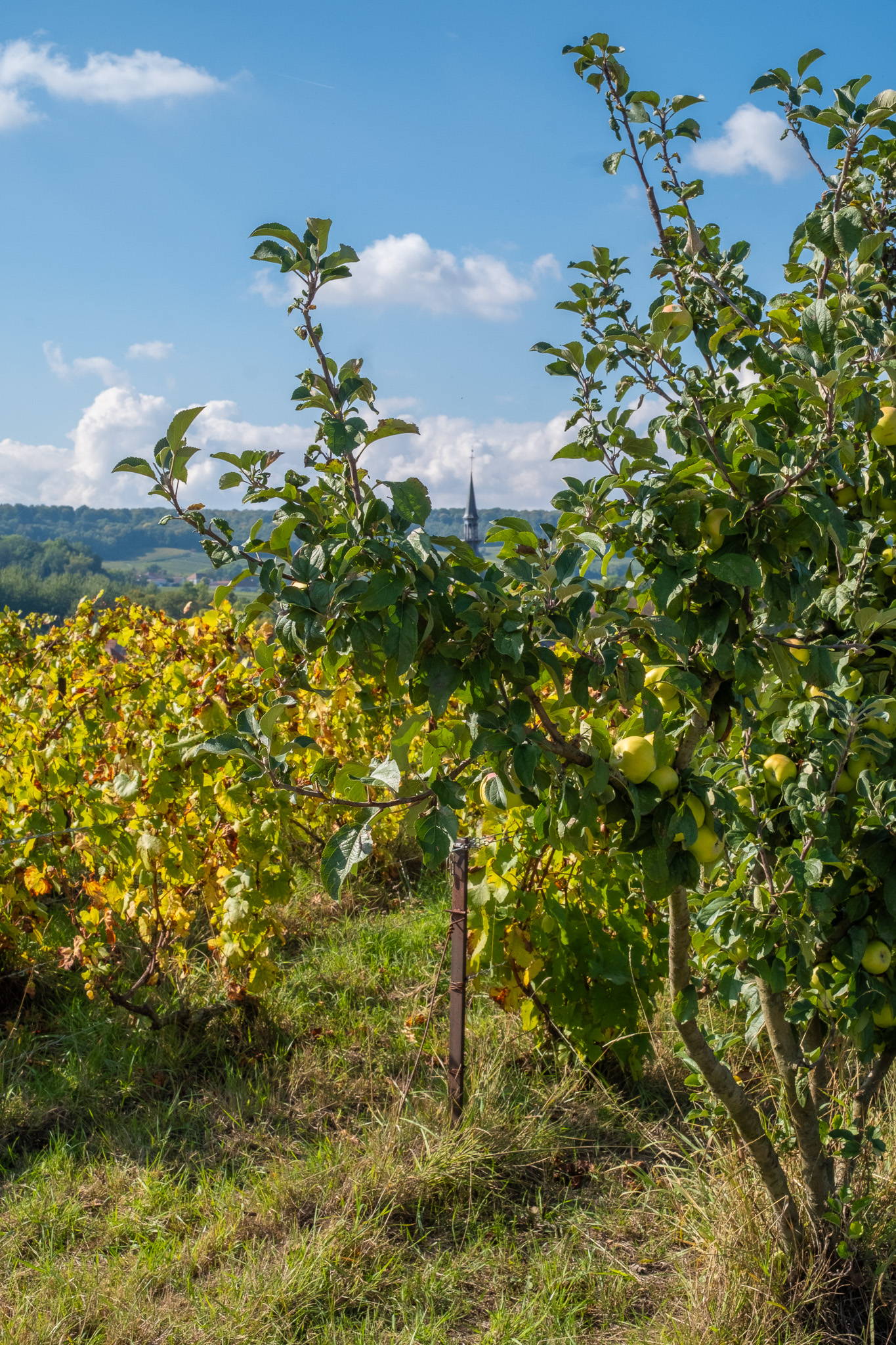
The trees that populate his vineyards were not planted by design. Willow, oak, hazelnut, cherry, they arrived on their own. Emilien watched them come and let them stay, reading their presence as an expression of the terroir rather than an intrusion upon it. He has since added a handful of fruit trees, apple, pear, black currant, for their pollen and flowers, but the philosophy remains: to plant is to impose; to allow is to listen. Agroforestry in Champagne is vanishingly rare. To have practised it for over a decade, not as a statement but as a matter of principle, is something close to singular.

His use of sulfur is kept to an absolute minimum, a small addition at press, and nothing more. For the still red wines, none at all. Zero dosage is not a dogma but a natural consequence of working fruit that has no need of correction. Emilien's wines are stabilised by farming, not rescued by chemistry.

Emilien came to winemaking with no cellar of his own. His first wines were pressed at the facilities of friends, Aurélien Lurquin and Thomas Perseval who lent not only their equipment but their generosity. This early period of borrowing shaped something essential in how Emilien thinks about the cellar: as a place of continuation, not transformation.


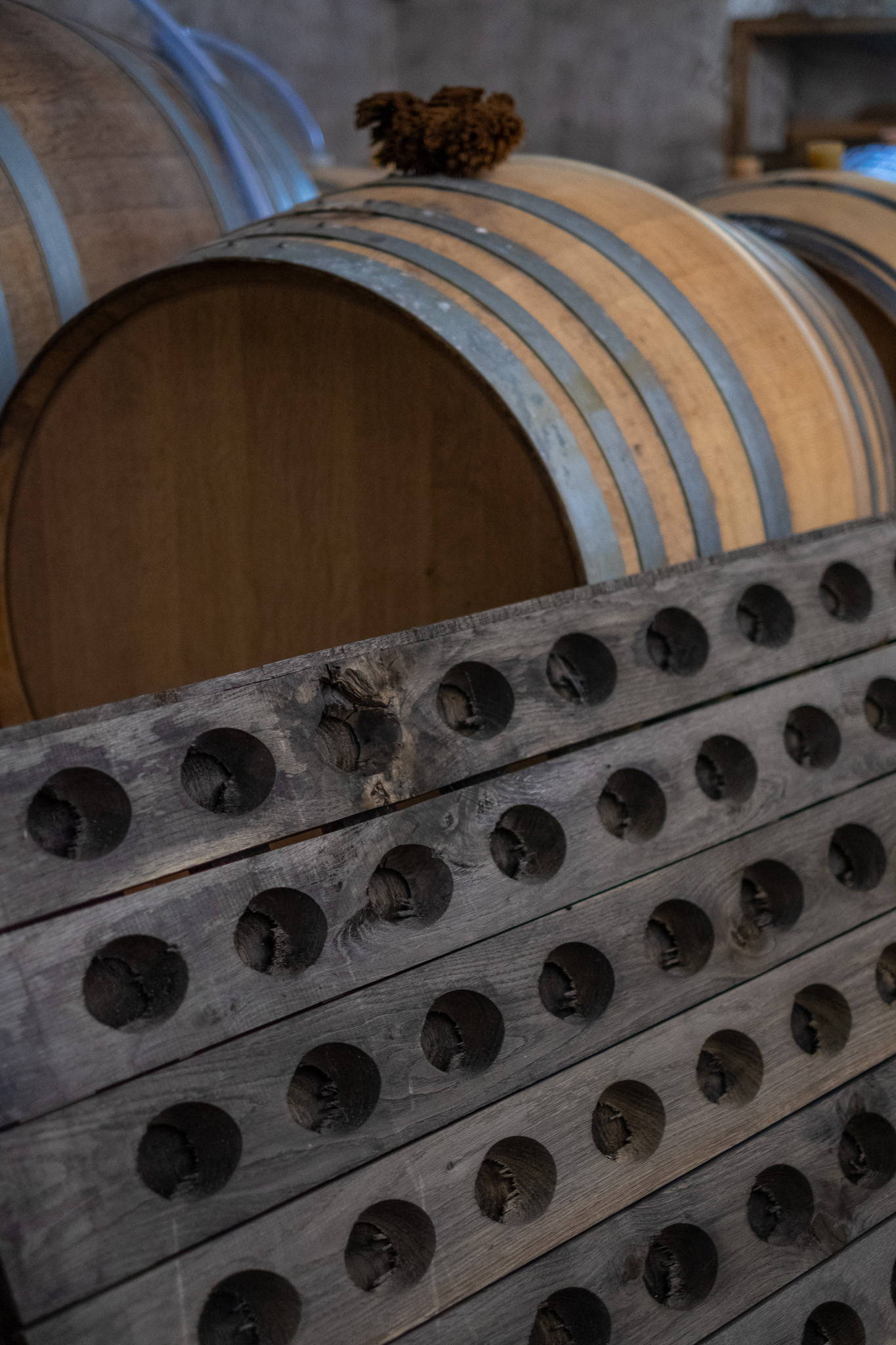
The wines are vinified plot by plot, each parcel kept separate to preserve its individual voice. Fermentations, both alcoholic and malolactic are entirely spontaneous, triggered by the indigenous yeasts resident in the vineyard and the winery. The vessels are old Burgundy barrels, many sourced from the Côte de Beaune, their wood neutralised by years of use, offering oxygen exchange without the imposition of oak flavour. Tirage is carried out with quartz, in the tradition of respecting the alchemy of the second fermentation. Disgorgement is performed without dosage.


The one exception to single-parcel vinification is Totum, a blend of every variety from every plot, pressed and fermented together, a kind of portrait of the whole estate in a single wine.


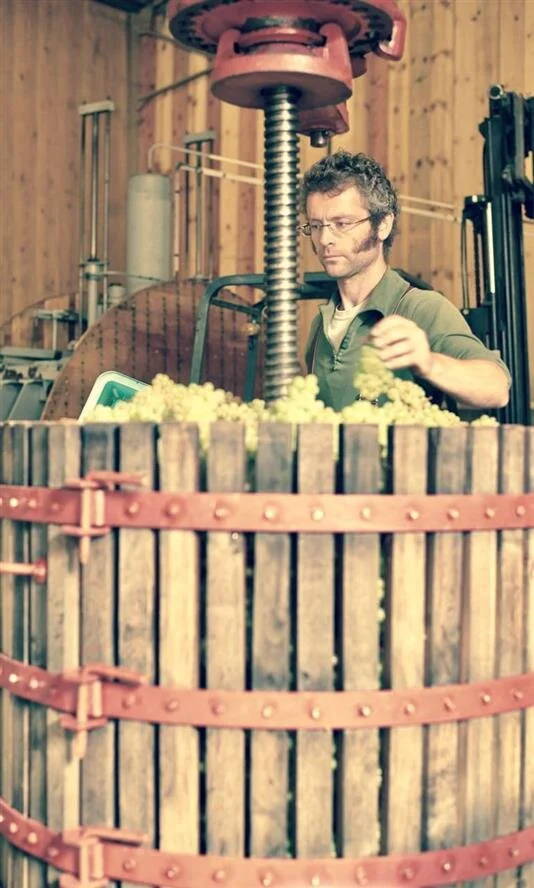
Emilien has since acquired his own press, chosen for the ability to work with gravity and allow manual control of each pressing cycle. He also keeps a small hand press, used for the rosés, a way of staying tethered to the original rhythm and sounds of harvest, a reminder that winemaking, at its core, is something felt as much as thought.
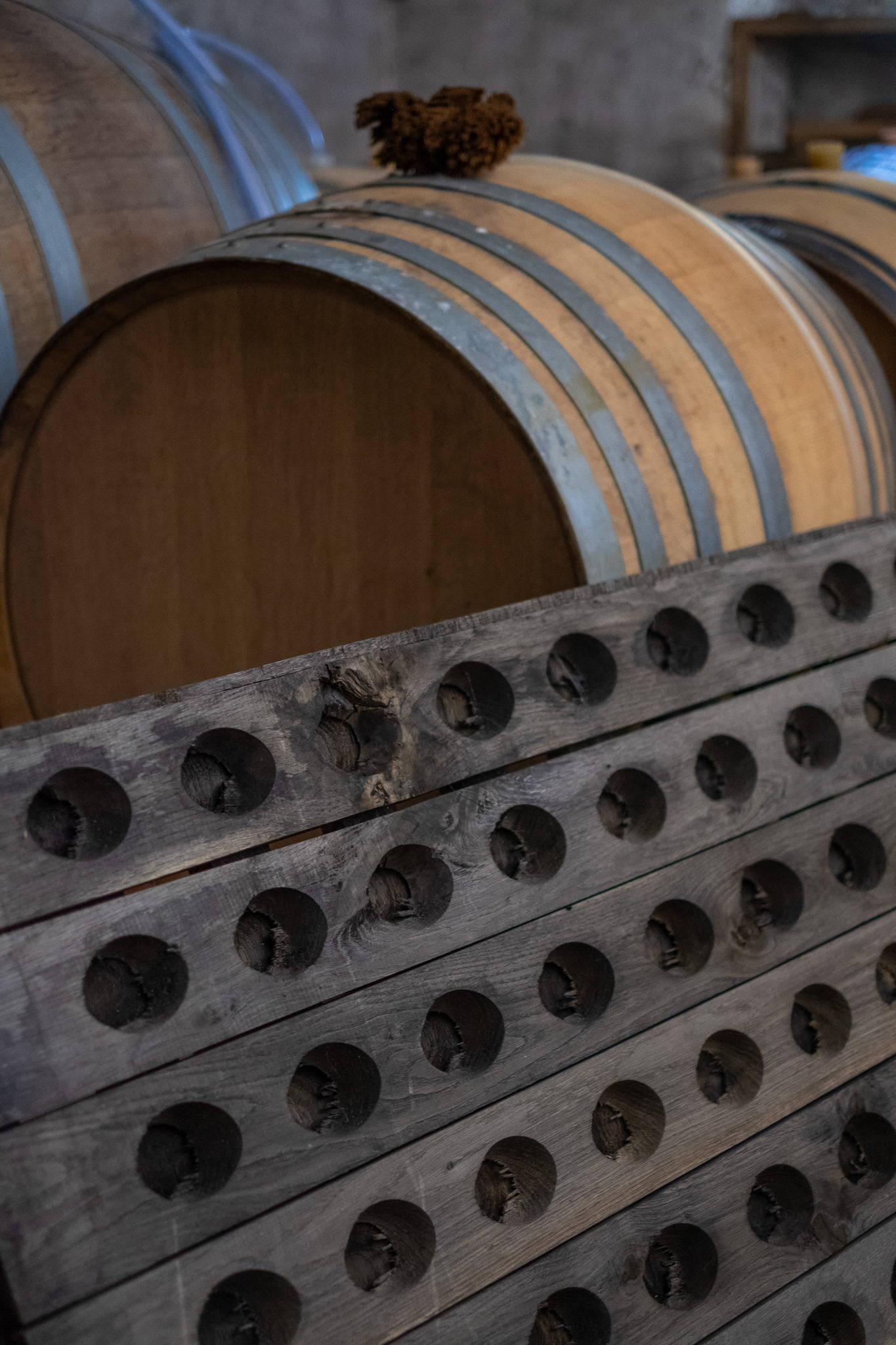
Emilien came to winemaking with no cellar of his own. His first wines were pressed at the facilities of friends, Aurélien Lurquin and Thomas Perseval who lent not only their equipment but their generosity. This early period of borrowing shaped something essential in how Emilien thinks about the cellar: as a place of continuation, not transformation.


The wines are vinified plot by plot, each parcel kept separate to preserve its individual voice. Fermentations, both alcoholic and malolactic are entirely spontaneous, triggered by the indigenous yeasts resident in the vineyard and the winery. The vessels are old Burgundy barrels, many sourced from the Côte de Beaune, their wood neutralised by years of use, offering oxygen exchange without the imposition of oak flavour. Tirage is carried out with quartz, in the tradition of respecting the alchemy of the second fermentation. Disgorgement is performed without dosage.


The one exception to single-parcel vinification is Totum, a blend of every variety from every plot, pressed and fermented together, a kind of portrait of the whole estate in a single wine.


Emilien has since acquired his own press, chosen for the ability to work with gravity and allow manual control of each pressing cycle. He also keeps a small hand press, used for the rosés, a way of staying tethered to the original rhythm and sounds of harvest, a reminder that winemaking, at its core, is something felt as much as thought.

The domaine extends across 2.37 hectares, divided into seventeen small, fragmented parcels spread across three villages in the western Montagne de Reims. It is a modest holding in surface area around four acres in total but one of extraordinary diversity.


Production remains tiny in the region of three to four thousand bottles per vintage, across a range that includes still Coteaux Champenois in red, white, and rosé alongside the Champagnes themselves.

REGION OF PRODUCTION

Champagne - France


APPELLATION

Champagne

FOUNDED

2015

VINEYARD

2.37 ha


CLIMATE

Ocean and continental climate


SOIL COMPOSITION

Cretaceous Chalk, Marl, Silex


VARIETIES GROWN

Pinot Meunier, Chardonnay, Pinot Noir, Petit Meslier


AGRICULTURE

Biodynamic


WINES OF THE DOMAIN

Search