







































PATTES LOUP
Thomas Pico
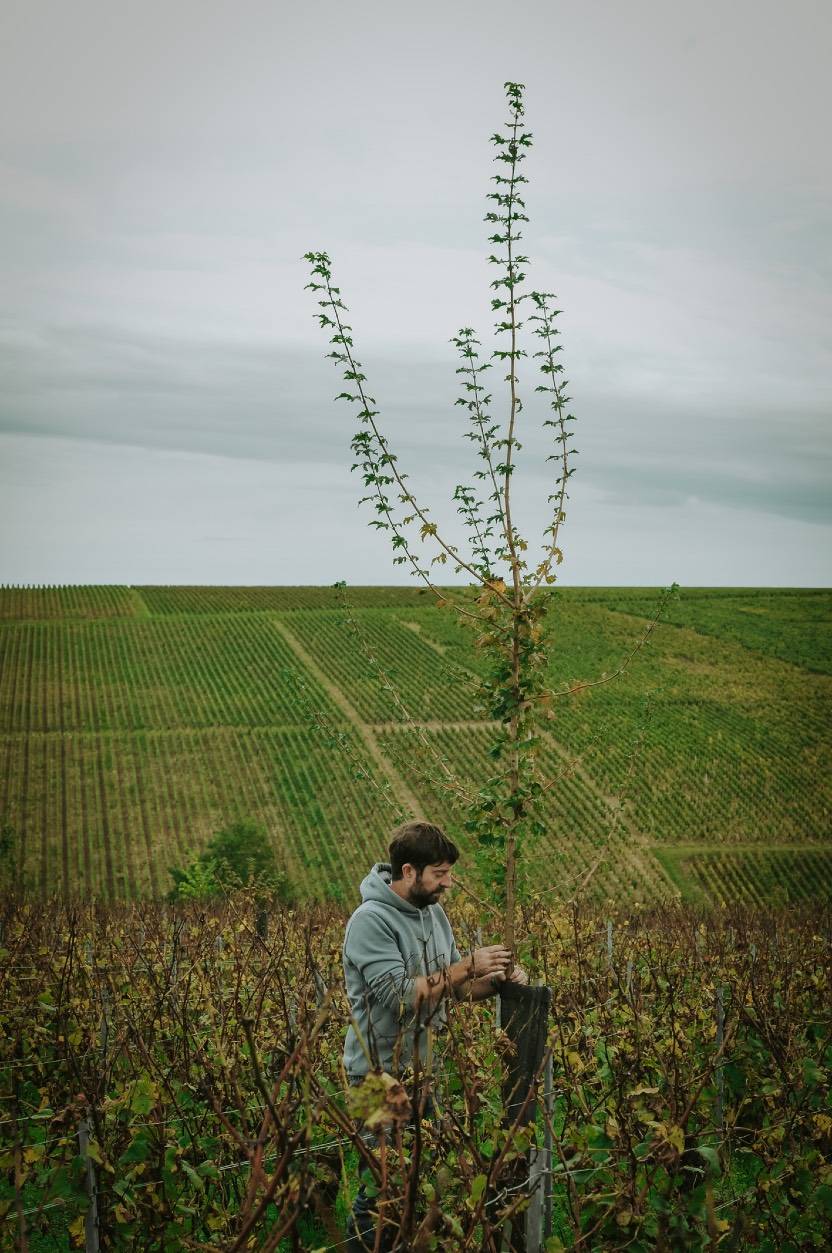
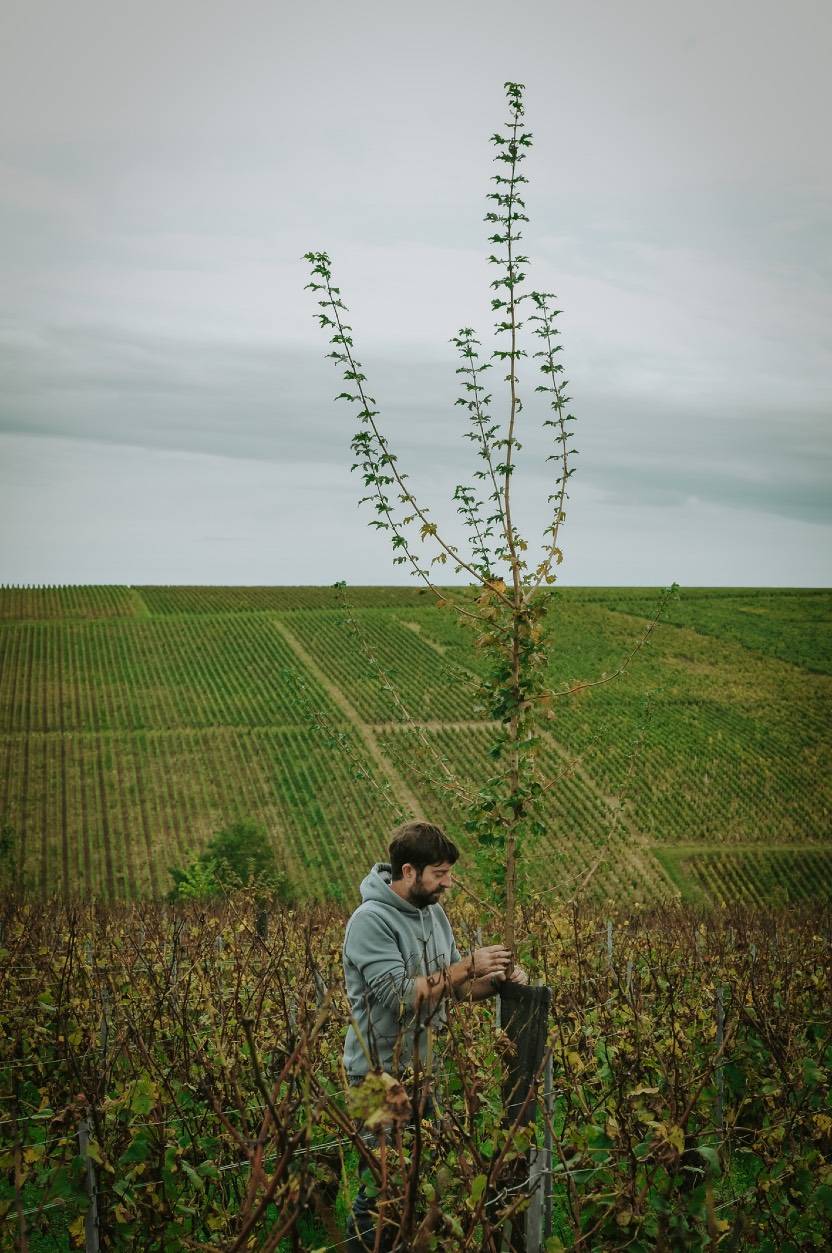
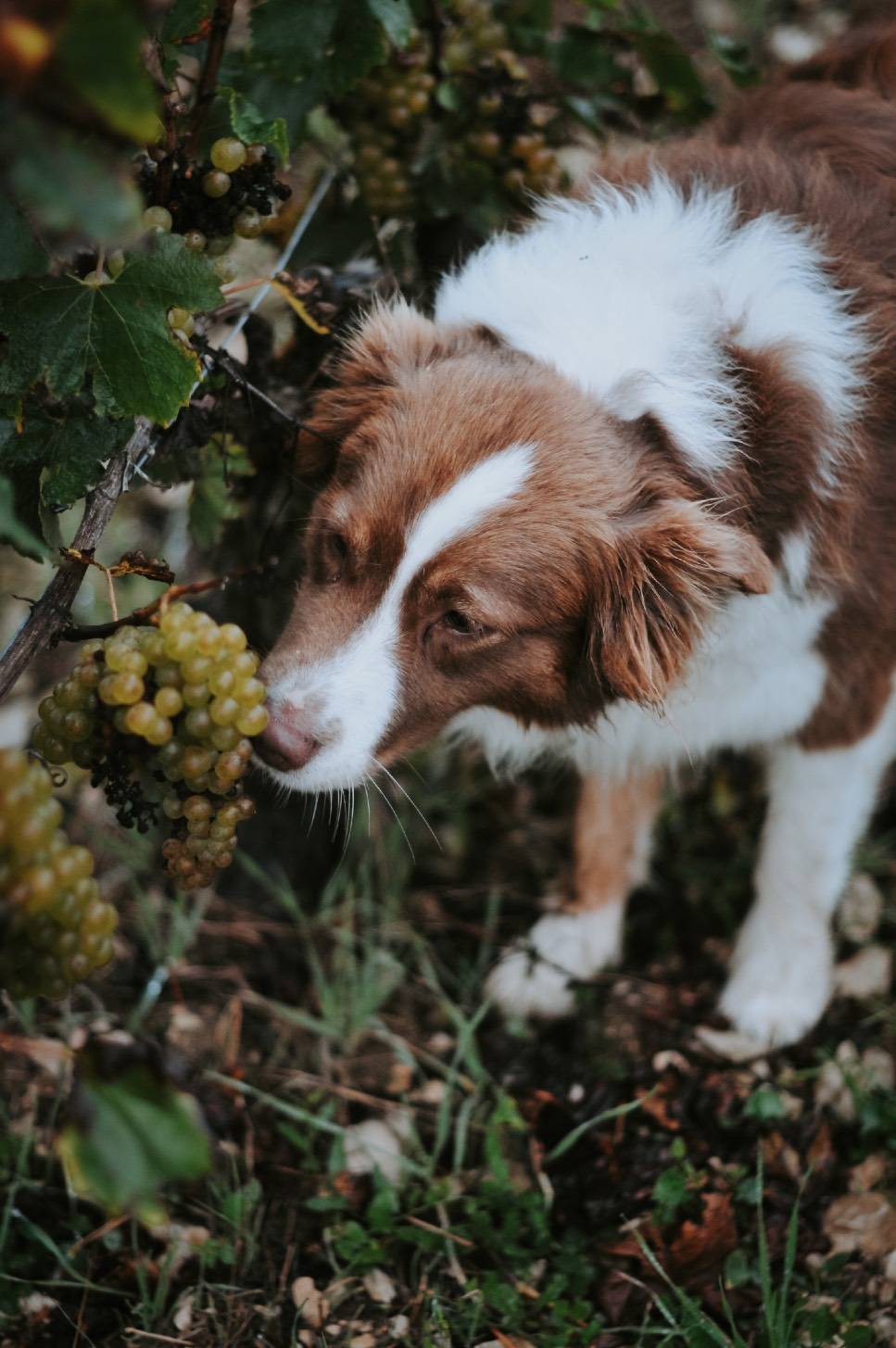
Pico’s vineyards are among the highest in the region, up to 300 meters in elevation, where cool nights and shallow Kimmeridgian soils yield wines of crystalline tension and depth. But this altitude also brings risk. The 2024 growing season, marked by unprecedented 1,500 mm of rainfall, extreme mildew pressure, frost, and coulure, resulted in over 80% crop loss. Still, the team did not waver. With up to 15 people in the vines and 18 treatments made entirely within organic parameters, they held the line farming honestly, without shortcuts, and paying the price to remain true to their principles.
Pico’s commitment to biodiversity runs deep. The estate has planted seven varieties of trees throughout its parcels as part of an ambitious agroforestry project, creating habitat and shade while drawing birds and life back to the land. Hedges have been installed in lieu of fencing on key parcels such as Vaudelune, and a pilot program in eco-grazing has begun in collaboration with a local shepherd. Cover crops fava beans, clover, radish are rotated yearly. And over 200 tonnes of biodynamic compost are now produced in-house using preparations and manure from local farms.
The result is a vineyard environment that hums with energy a stark contrast to the sterile, bare-soiled monocultures still typical in parts of Chablis.
The Wines
- Chablis AC: From 60+ year-old vines, fermented and aged in a combination of concrete, stainless steel, and neutral barrel. A powerful yet pure village wine, deeply mineral with saline length and subtle grip.
- Premier Crus: Pico produces Butteaux (from Montmains), Côte de Jouan, and Beauregard hillside vineyards with 30–60 year-old vines. Wines are aged in older barrels and then in tank or concrete for extended aging. These are serious, structured, age-worthy Chablis with vinous density and soaring aromatics.
- Butteaux 2020 and Beauregard 2020, both bottled in 2024 after nearly four years of élevage, defy the expectations of this solar vintage, showing surprising vivacity and freshness.
- Chablis 2021: A singular wine touched by noble rot, giving it an exotic edge and spice, the result of a difficult but distinctive harvest.
Domaine Pattes Loup is not just a story of farming or winemaking, it is a story of resilience, independence, and integrity. Even as climate extremes escalate and market pressures mount, Thomas Pico and his team remain committed to their land, their vines, and the kind of wine that takes time, demands patience, and rewards reflection.
These are not oysters-and-a-glass wines. These are wines to decanter, to follow over hours or days, and to cellar with confidence. They remind us that great Chablis is not just about chalk and salt, but about life, time, and truth.
REGION OF PRODUCTION
Burgundy - France
APPELLATION
Chablis
FOUNDED
2004
VINEYARD
15 ha
CLIMATE
Temperate climate
SOIL COMPOSITION
Clay-limestone soil on Kimmeridgian marls
VARIETIES GROWN
Chardonnay
AGRICULTURE
Organic